
A blog about U.S. immigration matters by Paul Szeto, a former INS attorney and an experienced immigration lawyer. We serve clients in all U.S. states and overseas countries. (All information is not legal advice and is subject to change without prior notice.)

Contact: 732-632-9888, help@szetolaw.com http://www.1visa1.com/

Showing posts with label travel document. Show all posts

Tuesday, July 26, 2022

Ombudsman Report Addresses Delay in Renewal EAD and Travel Document


In the 2021-2022 annual report provided by the Office of the Citizenship and Immigration Services Ombudsman (CIS Ombudsman), some important issues about immigration applications are discussed and recommendations made:

Delay in Issuing Renewing EAD

The extended processing time of EAD renewal applications is one of the most significant problems addressed. In fiscal year 2021, USCIS received 2.59 million applications for EAD. Half of the applications were based on a pending adjustment of status application (I-485) and asylum and withholding of removal application (I-589). According to the information published by USCIS, the median processing time for adjustment and asylum-based EADs is 7.5 months and 6.5 months, respectively. However, the report shows that more than 50% cases would take longer to be adjudicated. 

The severe delay of EAD applications interrupt applicants' employment and simultaneously interrupt the ability of U.S. business to employ their workforce continuously. The Ombudsman Office therefore urges USCIS to take further action to minimize lapses in applicants' employment authorization, including: 

  • Further extend the existing automatic extension periods and also consider new regulations to provide more flexibility to applicants who are waiting for a decision on EAD renewal; 
  • Provide better options for nonimmigrant spouses for EAD renewal; 
  • Allow early filing for renewal; and
  • Continue to expedite EAD renewals for workers for national interest purposes, etc. 

Barriers to Travel - Severe Delay of Advance Parole Document

Delay issuance of the Advance Parole document is another major issue addressed. As the wait for processing green card applications can range from 8 months to more than 20 months, the applicants' need for traveling increases as well. The requests received by the USCIS Contact Center and field offices to expedite and to obtain an emergency advance parole almost doubled, and applicants are finding it more difficult to receive the travel document in a timely manner. 

USCIS indicates that it takes time for the officers at field offices to make a discretionary decision on the emergency advance parole requests. As a result, certain USCIS offices do not schedule appointments for such requests after mid-afternoon to give the office time to complete the necessary steps. Other issues including staff shortage mean that applicants often has to wait days, or even weeks before they can hear back from the USCIS on their requests. Sometimes even worse, they have to make multiple follow-ups just to find out their request is no longer considered an “emergency” since they have had the time to wait for the response.

Improving Access to Expedite Process

The Ombudsman Office also discussed the process of the expedited request for immigration applications. The current criteria for expedited services including severe financial loss, emergencies and/or urgent humanitarian reasons, etc. While this is a way for applicants to speed up their applications based on sufficient reasons, the Ombudsman also notices that there is a lack of consistency and transparency when USCIS considers these requests. 

Hence, the Ombudsman Office encourages the USCIS to establish a centralized technological infrastructure and specialized personnel to intake and process expedite requests, and to develop a public-facing portal for receiving requests and supporting documents. Also, it would be helpful to create a new form for expedited requests submission, and to develop standardized guidance to officers while adjudicating the requests. 

Other issues discussed included the lack of efficiency of USCIS's online filing system and the continuous grown of the affirmative asylum cases backlog. The Ombudsman has urged USCIS to refine their operational approaches to improve the quality and efficiency while handling these matters, without compromising their integrity or equity.


(Immigration laws and policies change regularly.  If you have any questions regarding this article, please visit www.1visa1.com to schedule a legal consultation.) 


Thursday, June 18, 2020

Green Card Holders Traveling Abroad

Every year hundreds of thousands of foreigners become permanent residents of the United States. These permanent residents, or green card holders, often need to travel internationally soon after their arrival for various personal and business reasons.

Some may need to take care of their elderly parents; others may have to sell their assets from their home countries or wrap up their business affairs.  These new residents often wonder what documents are required for their international travel and safe return to the United States.

Documents needed to travel outside the United States
Generally, legal residents need valid passports from their countries of citizenship to travel to other countries.  For a passport to be valid, it must not be cancelled and be valid for at least six (6) months or longer.  For those individuals who do not have valid passports (e.g., asylees or refugees), they should apply for refugee travel documents to travel to a foreign country.  Further, the country that they are travelling to may also have other entry/exit requirements such as a visa to enter.  One should consult with these countries' embassies or the U.S. State Department to find out about these requirements.

Documents needed to reenter the United States
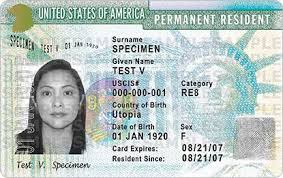
For permanent residents (aka lawful permanent residents, legal residents), they need to present their valid, unexpired Permanent Resident Cards (or "green cards")  to re-enter the United States after temporary travel abroad.  Upon arrival at a port of entry, a U.S. Customs and Border Protection (CBP) Officer will examine returning residents' permanent resident cards and any other identity documents, such as a passports, foreign national I.D. cards or U.S. Driver’s Licenses, etc., and determine if they  can re-enter the United States.

Would permanent residents lose their green card after international travel?
Normally, permanent residents are allowed to travel outside the United States for short periods of time.  However, if a CBP officer determines that a permanent resident has no intent to live in the the United States permanently, then the person could be found to have abandoned his/her permanent resident status.  A general rule is that if a resident has been absent from the United States for more than a year, the person is considered to have abandoned his or her green card. Absence of six months or longer creates a legal presumption of abandonment unless one can provide evidence to overcome this presumption.  Sometimes short but frequent trips may also serve as evidence of a person's giving up of his or her permanent resident status.  Ultimately, the DHS or the Immigration Court will look at factors such as family and community ties, employment history, income taxes, bank accounts, insurance documents, etc. to determine if abandonment has occurred.

Traveling aboard for one year or longer
Permanent residents who must be absent from the United States for longer than a year should first apply for a reentry permit on Form I-131. Generally speaking, securing a reentry permit before leaving the United States allows a permanent or conditional permanent resident to return to the U.S. after prolonged international travel.  Obtaining a reentry permit does not guarantee one's entry into the United States if the person is found to be otherwise inadmissible.  In the era of COVID-19, many legal residents are not able to return to the United States due to various travel restrictions. If you are not sure about your situation, it is important to first consult with an experienced immigration lawyer before making travel plans. 

Tuesday, August 7, 2012

Documents needed for long weekend travel between U.S. and Canada


Labor Day weekend is a very popular holiday for travel as it is often seen as the last chance to take a summer vacation.  Because of the close proximity between the two countries, many people don’t realize that official travel documents are required.  Gone are the days when one may just drive to Canada and return with their driver’s license or birth certificate.  Starting June 1, 2009, a new policy called the Western Hemisphere Travel Initiative (WHTI) was implemented, which requires U.S. and Canadian citizens, age 16 and older to present a valid, acceptable travel document that denotes both identity and citizenship when entering the U.S by land or sea.

Traveling to the United States
Exactly what documents can be used to enter or return to the United States?  The U.S. Customs and Border Patrol (CBP) strongly encourages travelers to obtain a radio frequency identification (RFID)-enabled travel document such as a U.S. or Canadian Passport, U.S. Passport Card, Enhanced Driver’s License/Enhanced Identification Card or Trusted Traveler Program card to expedite their entry and make crossing the border more efficient.  An enhanced driver license (EDL) or enhanced ID card (EID) confirms both the bearer’s identity and citizenship, and is an acceptable alternative to a passport for re-entry into the U.S. at land and sea border crossings.  Currently, four (4) states including Michigan, New York, Vermont and Washington are issuing these enhanced documents.  Trusted Traveler Programs issue four different cards - Global Entry (U.S./Mexico/Netherlands), NEXUS (U.S./Canada), SENTRI(U.S./Mexico) and FAST(Commercial Truckers).  Any of the cards can be used at all U.S. land and sea ports of entry.  For permanent residents of the United States, they may use their permanent resident card (green card) to return to the U.S.

Traveling to Canada
Similarly, Canadian law requires all persons entering Canada from the U.S. by car present proof of citizenship and identity. U.S. citizens can present a U.S. passport and Nexus card as they fulfill both of these requirements.  If they don’t have these documents, they may use a government-issued photo ID such as a driver’s license and proof of U.S. citizenship such as a birth certificate or naturalization certificate.  However, although a U.S. Citizen may enter Canada by car using one’s driver’s license and birth certificate, the person would not be able re-enter the U.S. with these documents.   Non U.S. citizens traveling between the U.S. and Canada by car must also produce proof of citizenship from their country and proof of identity. Again, a valid passport from his country or origin or other WHTI-compliant document will satisfy the border requirements for both the U.S. and Canada.

CBP also provide these travel tips: (1) Be familiarized with customs requirements to  avoid fines and penalties associated with the importation of prohibited items.  (2) Be prepared for the inspection process before arriving at the inspection booth; have travel documents ready; be ready to declare all items acquired outside of the U.S.; end cellular phone conversations.  (3)  During periods of heavy travel, border crossers may wish to consider alternative, less heavily traveled entry routes. (4) Allow extra time for travel during holiday season; (5) Know the difference between goods for personal use vs. commercial use.  (6) Do not attempt to bring fruits, meats, dairy/poultry products and firewood into the United States from Canada without first checking whether they are permitted. (7) CBP also reminds U.S. lawful permanent residents that the I-551 form (green card) is acceptable for land and sea travel into the U.S.
  
Understand that CBP officers have the authority to conduct enforcement examinations without a warrant, ranging from a single luggage examination up to and, possibly, including a personal search. Even during the summer vacation season, international border crossers should continue to expect a thorough inspection process when they enter the U.S. from Canada.